News
Focusing on cutting-edge technologies to lead the innovative development of the acoustic industry, the 2nd National Conference on Acoustic Sensing and Instruments was successfully held in Shenzhen
The Second National Conference on Acoustic Sensing and Instruments will be held in Shenzhen from March 26th to 29th, 2026. The theme of this conference is "Frontiers in Sound Sensing, Creating the Future with Instruments", bringing together more than 400 experts and scholars from universities, research institutes, and enterprises across the country to explore the cutting-edge technologies and development trends in the field of acoustic sensing and instruments. The conference was co sponsored by the Acoustic Sensing and Instrument Branch of the Chinese Acoustics Society and the Acoustic Instrument Professional Committee of the Chinese Instrument and Meter Society, and organized by the Chinese Academy of Sciences Shenzhen Advanced Technology Research Institute, the National Key Laboratory of Medical Imaging Science and Technology System, and the Shenzhen Key Laboratory of Ultrasonic Imaging and Treatment Technology, which reflects the characteristics of the conference with deep integration of industry, education, research and application. The conference has set up six specialized forums, covering cutting-edge fields such as sound field construction and control, acoustic sensing, modern acoustic measurement and detection, multimodal acoustic signal processing and imaging, acoustic instrument systems, and the 2nd Acoustic Research Achievement Application and Industrial Transformation Seminar. The meeting arranged a total of 50 invitation presentations and 94 oral presentations. In addition, 15 well-known exhibitors participated in the conference and exhibition, showcasing the latest products and technological achievements in the field of acoustic sensing and instruments.
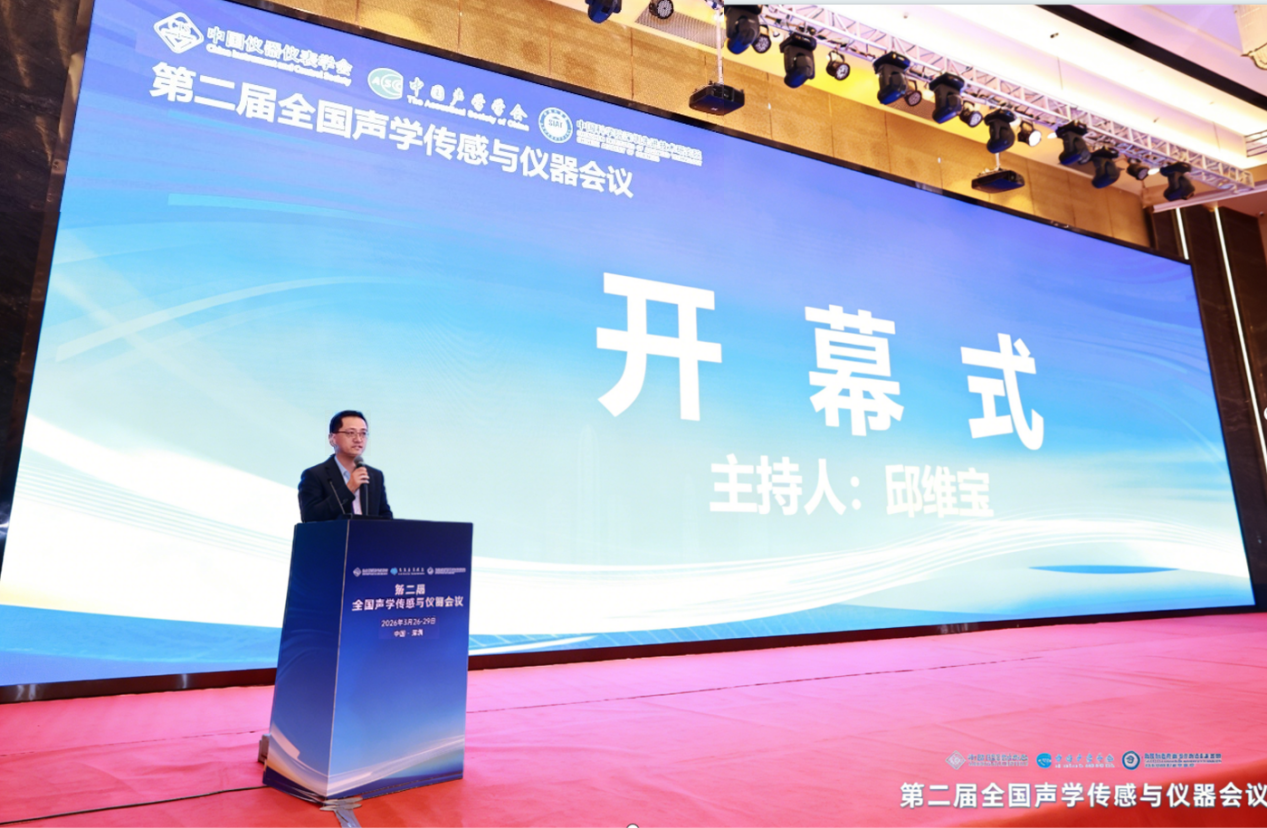
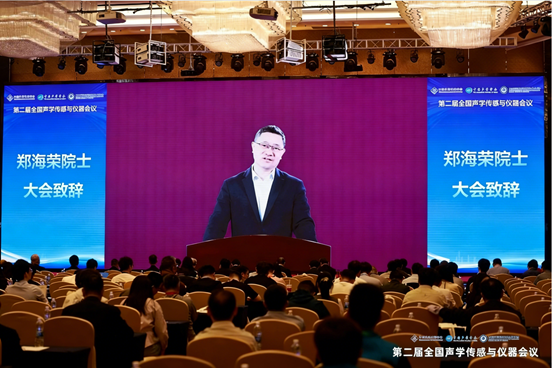
The opening ceremony of the conference was presided over by the chairman of the conference, Professor Qiu Weibao of the Chinese Academy of Sciences Shenzhen Institute of Advanced Technology, Academician Zheng Hairong, Executive Vice President of Nanjing University/Director of the National Key Laboratory of Medical Imaging Science and Technology System, Liang Dong, Vice President of the Chinese Academy of Sciences Shenzhen Institute of Advanced Technology, and the chairman of the conference/Vice President of the Chinese Society of Acoustics/Director of the Acoustic Instrument Special Committee of the Chinese Society of Instrumentation and Acoustics and Director of the Acoustic Sensing and Instrument Branch of the Chinese Society of Acoustics, Professor He De'an, gave welcoming speeches, and Ni Peigen, Deputy Director of the Department of Mathematics and Physics of the National Natural Science Foundation of China, Zhang Tong, Vice President/Secretary General of the Chinese Society of Instrumentation, and Wang Xiuming, Executive Deputy Secretary General of.
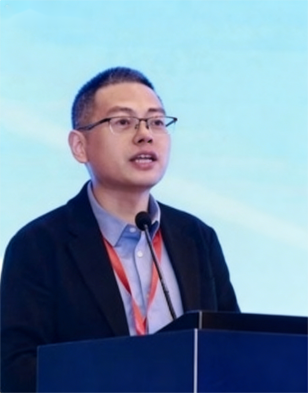
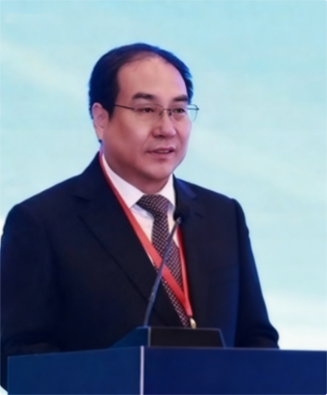
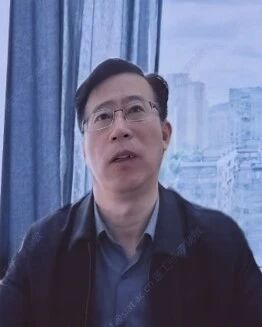
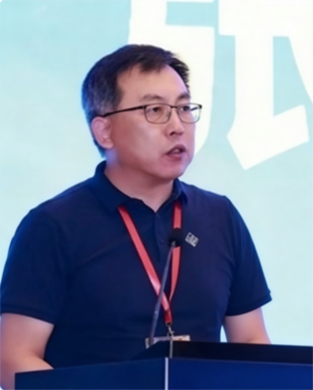
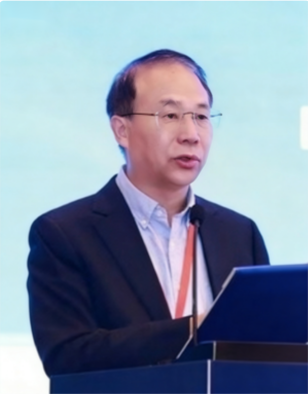
During the conference, several academicians and renowned experts and scholars delivered conference reports. Academician Cheng Li, Academician Wang Haibin, Professor Lin Jing, Researcher Qiu Weibao and other experts had in-depth exchanges on cutting-edge directions such as metamaterial assisted guided waves, underwater observation network technology, variable thickness aviation structure ultrasonic testing, and the development of new biomedical ultrasonic transducers and instruments. These reports not only showcase the latest research progress in the field of acoustic sensing and instrumentation in China, but also provide valuable learning and exchange opportunities for participants.
Professor Cheng Li, a member of the Royal Society of Canada Academy of Sciences, the Canadian Academy of Engineering, and the Hong Kong Polytechnic University, pointed out in his conference report titled "Guided Wave Generation and Sensing Assisted by Metamaterials" that precise regulation of guided wave behavior is the key to improving the sensitivity of structural health monitoring (SHM) damage detection. In response to the limitations of traditional wave control methods, the team utilized metamaterial technology to achieve efficient beam manipulation, verified the feasibility of enhancing nonlinear guided wave detection, and customized metamaterial devices such as filtering, directional propagation, and mode conversion based on topology optimization reverse design. At the same time, the potential of acoustic black holes in improving monitoring sensitivity was preliminarily verified. The integration of metamaterials and guided wave control technology will promote the development of SHM systems towards a more intelligent and efficient direction.
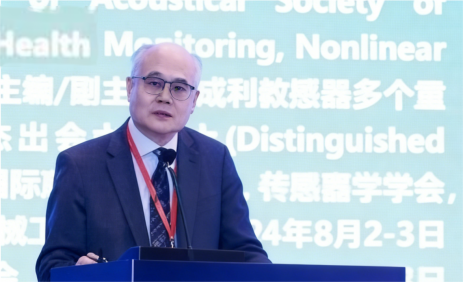
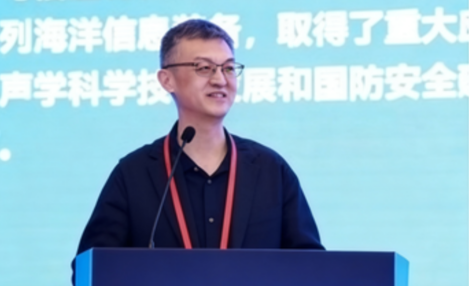
Wang Haibin, academician of the Institute of Acoustics, Chinese Academy of Sciences, pointed out in the report of the conference that China's South China Sea Seabed Scientific Observation Network has been fully and stably operated in 2025. Our research team has made key technological breakthroughs in remote energy feeding and high-speed communication connection, wide area cross frequency underwater acoustic networking, and real-time observation of the entire deep sea profile, completing the research and development of core equipment and the full chain of system integration. At present, the network continues to produce high-precision in-situ observation data and has played a key role in underwater ecological processes, typhoon evolution, earthquake monitoring, and deep-sea resource exploration. In the future, we will face the strategy of building a strong deep-sea nation, promote multi-user open sharing and interdisciplinary integration, and construct an independent and controllable underwater observation technology system.
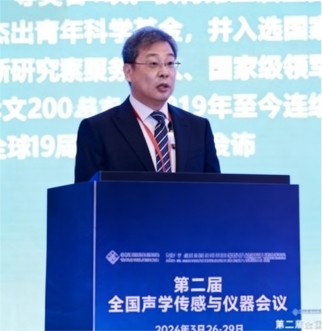
Professor Lin Jing from Beihang University pointed out in the conference report that in response to the bottleneck of traditional ultrasonic testing in variable thickness aviation structures, which is difficult to balance high resolution and high efficiency, his team proposes a new idea of wideband and multi-mode detection based on non-contact laser ultrasound, focusing on developing multi-mode acoustic fusion detection technology. At present, this technology has achieved a series of application results on typical aviation structural components such as engine blades, turbine disks, and wing wall panels. In the future, it will provide theoretical and technical support for the development of multi scenario aviation and aerospace structural damage detection systems, and help China's aviation equipment non-destructive testing capabilities move towards a higher level.
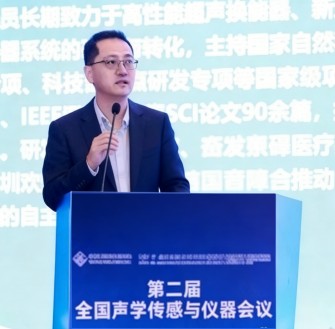
Qiu Weibao, a researcher of the Chinese Academy of Sciences Shenzhen Institute of Advanced Technology, introduced the development of new biomedical ultrasonic transducers and instruments from the core devices, imaging methods to the overall system in the conference report. The team has developed an ultrasound transducer covering 1-100MHz and proposed a new method of combining ultra-high frequency with ultra fast functional imaging, significantly improving the sensitivity of detecting small blood flows. The team incubated and established Huan Ying Medical, and its 80 element large aperture intracardiac ultrasound catheter obtained a Class III medical device registration certificate. The independently developed small animal ultra-high frequency imaging, brain functional imaging, and programmable ultrasound platform have been widely used. In the future, it will continue to evolve towards higher resolution, multifunctional integration, and intelligence.
During the conference, the founding ceremony of the Acoustic Sensing and Instrumentation Branch of the Chinese Acoustic Society was held. Researcher Wang Xiuming, Executive Deputy Secretary General of the Chinese Acoustic Society, read out the approval document for the establishment of the first professional branch. With the approval of the society, Professor An was appointed as the chairman of the first branch, and nine experts including Liu Yang, Qin Peng, Sun Mingjian, Tang Zhifeng, Zhang Tao, Zheng Yang, Liu Lishuai, He Xiao, and Lin Dudu were appointed as vice chairmen. Feng Ting served as the secretary of the branch. The establishment of this branch is an important organizational deployment made by the Chinese Acoustic Society in response to major national strategic needs and to strengthen independent innovation capabilities. Currently, high-end acoustic sensors and instruments remain a prominent weakness in China's instrumentation field. The branch will coordinate the country's advantageous scientific research and industrial forces, concentrate on tackling relevant "bottleneck" technologies, and help China achieve a leap from an acoustic application country to an acoustic technology powerhouse.
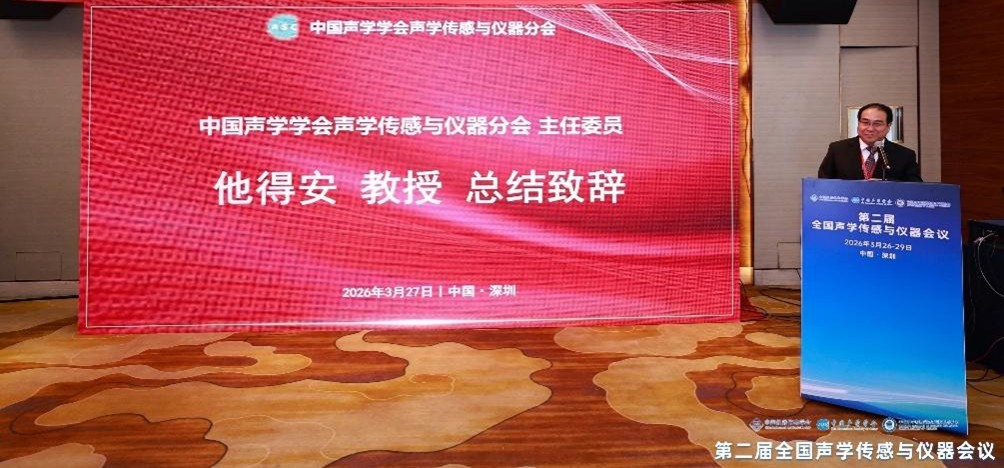
At the same time, a mid session meeting of the Acoustic Instruments Professional Committee of the Chinese Instrumentation Society was held during the conference, and 8 comrades were added as members of the Acoustic Instruments Professional Committee.
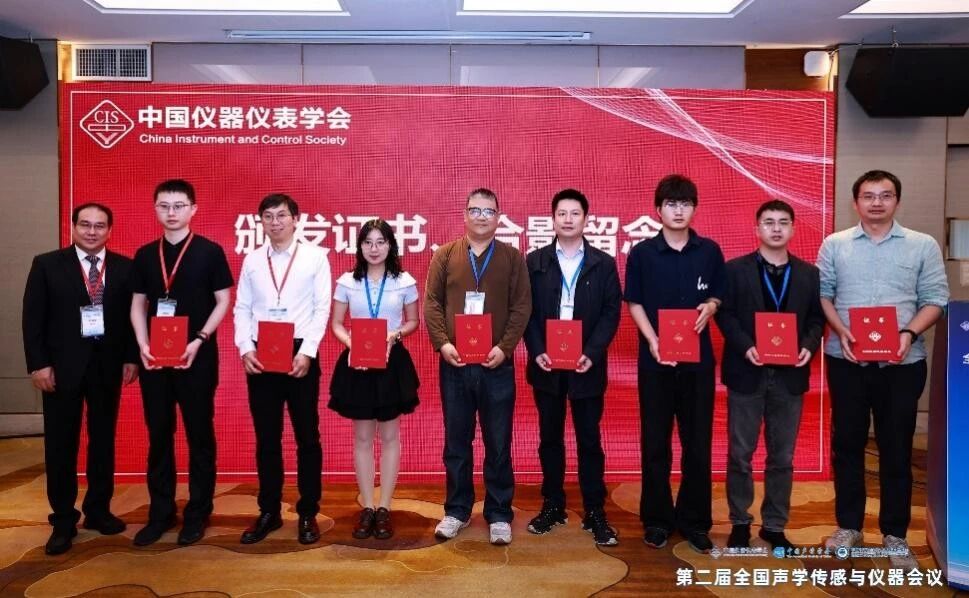
At various sub venues, experts and scholars gave wonderful reports on cutting-edge technologies in acoustic sensing and instruments, sharing the latest scientific research progress. In each group discussion session, the attending representatives conducted in-depth exchanges and practical discussions on common technical problems in the industry. The exhibition area set up at the same time of the conference showcased a series of domestically produced new instruments and equipment, comprehensively demonstrating the increasingly strong independent innovation capability and industrial vitality in China's acoustic sensing and instrument field. This conference provides a high-level platform for cooperation and exchange among domestic scientific and technological workers engaged in acoustic sensing and instrument research. Starting from this conference, all parties will further strengthen the collaboration between industry, academia, research and application, accelerate the transformation of scientific and technological achievements into practical applications, and jointly promote the higher quality and more sustainable development of the acoustic sensing and instrument industry, helping China's acoustic sensing and instrument industry to continuously step onto a new stage.
At the closing ceremony of the conference, it was announced that the 3rd National Conference on Acoustic Sensing and Instruments will be held in Weihai, Shandong in 2027, led by Professor Sun Mingjian from Harbin Institute of Technology (Weihai). Let's meet again in Weihai in 2027!

